Mixed Spice is the British twin of the famous pumpkin pie spice that is used in the United State.
Mixed Spice a mix of fragrant sweet spices, and is also called ‘pudding spice’ because of it’s warm, spicy, and sweet faroma. It’s traditionally used in baking, adding a delicious flavour to cakes, biscuits and puddings. You can use it generously.
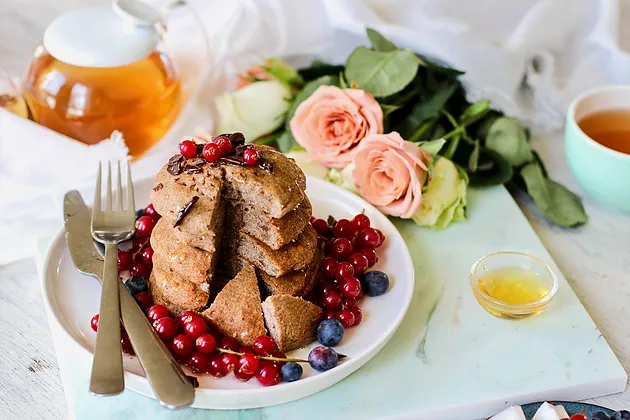
What’s better than pancakes on a Sunday morning? Not much springs to my mind, other than a good cup of coffee.
Credit: Pick Up Limes
These are delicious – and you don’t even need to your frying pan out to prepare them. This is a healthier and gluten-free version (if you want). Thanks to Pick Up Limes we can now all enjoy these Sunday morning treats 🙂 Pick Up Limes is my absolute favourite website and for plant-based recipes, is a constant resource for me when I’m browsing for wholesome and healthy foods. The heart and soul behind the website and the channel is Sadia, an amazing Canadian dietitian. I love her thoughtful advise and amazing energy! A true inspiration – go check her contents out – I’m sure you’ll fall in love too!
Preheat your oven, get your coffee machine going, and have a fabulous Sunday!
Missing a bit of cheese in your new vegan life? I hear you!! It was one of the hardest things to give up, and probably still is.
Luckily I found Anja on youtube! She’s German, just as me, but now lives and prepares plant-based plates of happiness in Australia. I’m not sure that counts for something on my quest to quench my cheese appetite, but her does a very good job!
There’s more benefits to this dish though than my cheesy happiness!
Seasonal eating
Let’s not steal the show for the main ingredients: Sweet potato and Kale! Both are in season now in the UK, which makes this dish even more healthy and benefits the environment. Seaonal food even tastes better as it ripens naturally and is picked at the right time. Generally, seasonal and local vegetables (and fruit) retain more nutrients than their non-seasonal counterparts because they travel less milage before landing on your kitchen counter. Less travel and less refrigeration means less fuel and energy usage, hence less CO2 emissions and other pollutants into our atmosphere. As a consequence, our planet is happy too!
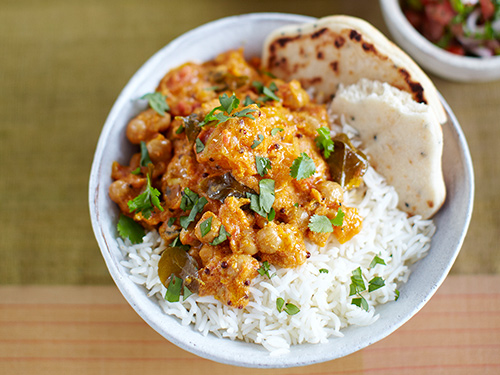
This is absolutely one of my favourite Autumn and Winter dishes! I cannot even count how many times I’ve prepared it since its’ discovery. It always hits the spot. Perfectly balanced flavours of ginger spice and coconut creaminess – bliss after a cold day out!
Thanks to Jamie Oliver for this one! I slightly tweaked his recipe though as it is a huge portion size. I halved the amount. You may want to pre-prepare this for Guy Fawkes night. It’ll be developing wonderful flavors if you prepare it some time ahead.
Ingredients
1/2 butternut squash or pumpkin (appr. 450 gr)
4 cm piece of ginger
4 shallots or 1 small to medium sized red onion
3-4 cloves of garlic
1 fresh red chili
1 bunch of fresh coriander – separate stems from leaves and don’t throw the stems away!
coconut oil
1 tsp mustard seeds
20 curry leaves, preferably fresh but if you cannot get them, use dried ones
1 tsp turmeric powder
200 gr (1/2 tin) chopped tomatoes
400 gr (1 tin) coconut cream/coconut milk
400gr (1 tin) chickpeas
Preparation
Remove the hard squash/pumpkin skin and chop into bitesize pieces
Finely chop or grate the ginger, chop the shallots/red onion, chop the garlic, and the coriander stems. Seed and chop the red chili.
Heat some coconut oil in a large pot at medium to high heat. Add the ginger, garlic, red chili and shallots/red onion, and reduce to medium heat. Cook until golden, stirring occasionally.
Add the mustard seeds, curry leaves, and coriander stalks and fry until the curry leaves go crispy.
Add the turmeric, tomatoes and coconut milk, and bring to the boil.
Then, add the squash/pumpkin pieces and chickpeas and reduce to low heat. Cover with a lid and simmer for 45 minutes. Check occasionally. (add a splash of water if it looks a bit dry)
When the time’s up, take the lid off and cook for a further 15 minutes or so until the sauce is lovely and thick.
Scatter with coriander leaves and serve with rice or naan bread.
For more plant-based inspirations please leave us your details below, and we’ll inform you via email when we upload new recipes to our website!
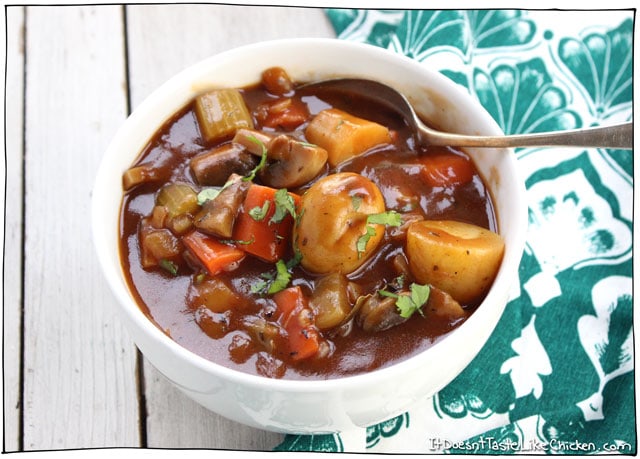
What better way that combining World Vegan Day and International Stout Day than with this hearty ? Perfect to celebrate both Days, or if you need something warming on a rainy day!
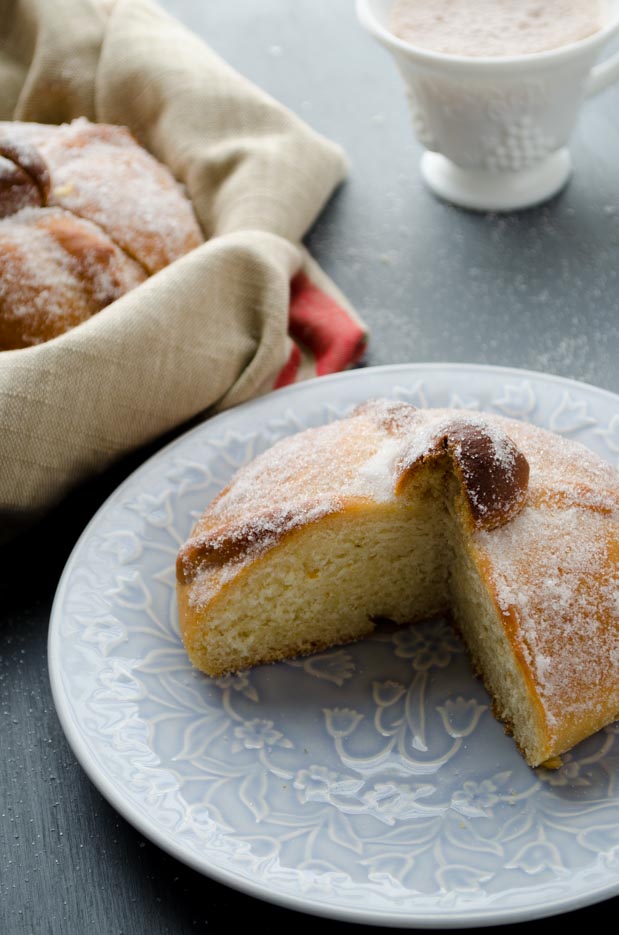
Celebrating World Vegan Day and the Day of the Dead – Día de los Muertos– on the same day is fabulous!! Not only can I induldge in some sweet baked bread, but it also allows me to time and space travel whilst munching away.
Its’ flavour and texture take me back to my first Día de los Muertos experience. My friends invited me to join celebrations in a small village in the State of Veracruz, Mexico. After a short ride from Xalapa, I found myself surrounded by exotic aromas, scents, vibrant colours, music, and beautifully decorated streets, door frames, and ofrendas. Ofrendas are lovingly decorated altars, set up in families’ homes, which are overflowing with candles, flowers, fruit, candy skulls, and A LOT OF FOOD! A center piece is the Pan de Muerto – absolutely essential to the ofrenda!
I spent quite some time to find a ‘veganized‘ version of the traditional sweet treat. I’m happy I finally found a (Thank you Dora!!) that’ll take you closer to the mystical tradition that the Aztecs started some 3,000 years ago. What a legacy, amongst so many other traditions and relics!
Enjoy with a hot chocolate, or coffee, to dip – then lean back, close your eyes, and allow your mind to travel….
Did you know that the first of November is ‘World Vegan Day’? And as if that wasn’t enough, did you know that the entire month of November is officially ‘World Vegan Month’?? Many of you will be equally excited as I am, already planning their plant-based meals for the days and weeks to come. Many more though will now be rolling their eyes… I know. And that’s OK.
Facts, not fiction
I’m not trying to convince anybody what to eat or what not to eat. What I’d like to do, is present some facts. It’s up to you then to decide what to do with these. You have to admit though, some of the facts presented in the video are quite convincing to try at least for a day, the 1st of November 2018. If you manage to cut out all animal products for an entire day, that’s already a huge achievement! Imagine just 1 person in 100 doing this. Extrapolating that globally – that’s HUGE!
World Vegan Day is not a new thing. It’s not ‘the new kid on the block’ as many of you may assume because the vegan movement has been growing exponentially over the past 5 years. World Vegan Day in fact has been around since 1994, and it is not a coincident that it falls on the same day as the ‘Day of the Dead’. El ‘Día de los Muertos’, is an ancient multi-day holiday, which starts on the 1st of November and is celebrated throughout Mexico.
Let’s embrace the vegan challenge together
I embraced the vegan lifestyle in 2015. Although that doesn’t make me a complete ‘newbie’, I am excited to learn more as I go. Moreover, I am trying to bridge the divide between vegans and non-vegans. The world is getting too small of a place to put labels onto people who’s motives we don’t understand. We’re all breathing the same air and share the same planet, so let’s learn from each other rather than ‘roll our eyes’ or worse, attack each other for our choices. It’s not a diet; it’s an identity. You don’t do vegan, you are vegan (or not).
Let’s start with a sweet incentive – traditional Pan de Muerto
My connection with México runs deep! Living in this beautiful and mystical country for almost 2 years, on and off, I learnt to love their Día de los Muertos traditions! I am deeply grateful that I experienced this festivity in the small villages, pueblitos, in the State of Veracruz, to which my university friends kindly invited me. Amazing and unforgettable – this was a true experience of Mexican hospitality!! And, I was introduced to Pan de Muerto, a special sweet treat, which is offered to the spirits of the beloved relatives who passed away. In some cases the sweet bread is eaten at the side of their graves, and it is believed that the spirits absorb its’ flavour and essence.
Pan de Muerto, Despeinadas (Mixquic)
Try for yourself! It’s a real delight, and makes your vegan day, or maybe the first day of your vegan month (?) a lot easier 🙂 I’ll be sharing my favourite plant-based recipes daily this month. This said, I hope you’re motivated to cook along and take on the ‘vegan challenge’ until the 30th Nov!
I’d love to hear your thoughts and comments. Please share below!
Sitting is the new smoking and how a curry after your workout may help
I’be always admired doctors and anybody in the medical profession who’d give credit to the medical properties of herbs and spices, as they don’t get the credit they deserve.
What’s the issue?
We long seem to have forgotten what our ancestors knew about using herbs and plants to heal ailments. The idea that food is our medicine is as old as time; yet with the introduction of modern medicines, and the growth of the pharmaceutical lobby we are putting our health in the hands of a commoditized business.
The stigmatization of “natural” remedies paired with insufficient understanding of the mechanisms of natural plant products or plant based agents have withheld the medical community from its clinical uses, although their use has been shown to be effective in treating chronic conditions including IBD, Alzheimer’s disease, rheumatoid arthritis, and cancer – to name a few.
A bright orange coloured solution that has been around for thousands of years
For many years the “curry spice” curcumin, the principle component of tumeric, has been used in Asia for treating medical conditions like respiratory illness, liver disorders, arthritis, heartburn, stomach pain, diarrhea, intestinal gas, stomach bloating, and loss of appetite, and it has been used in topical treatments for issues like skin inflammation, sprains, swelling, and infected wounds.
Treatment of all types of human disease, whether chronic, acute, or malignant, has evolved over time. Curcumin though is unique for medical treatments as it has multiple targets and mechanisms of action. It has been confirmed by scientific research to be antimicrobial, anticarcinogenic, cardioprotective, thrombosuppresive, and hepatoprotective.
Curcumin can be found worldwide not just as a medical treatment in the form of capsules and tablets, but as well as a supplement in ointments, energy drinks, soaps, and cosmetics. What remains to be difficult is to achieve optimum therapeutic concentrations due to low solubility and poor bioavailability of curcumin. Curcumin is rapidly metabolized and conjugated in the liver, and then excreted with limited systemic bioavailability.
So – Don’t forget to spice it up!
The most common method to increase the bioavailability of curcumin is to combine its intake with black pepper (Piper nigrum) or long pepper (Piper longa).
Care instructions
Although no significant toxicities of curcumin reported from almost 40 clinical trials involving over 800 participants, most adverse events with daily curcumin intake occur at amounts greater than 4 g a day. Further, curcumin should be taken with caution by those with marginally low iron stores or other diseases associated with iron such as anemia of chronic disease. Doses of 2–4 g per day are considered safe and tolerable under its intended use.
The idea that medical conditions can be treated with or supplemented with a traditional kitchen spice is exciting; however, many more large-scale clinical trials to demonstrate the efficacy and safety of curcumin for the treatment of a multitude of human diseases are needed in addition to the current toxologic and pharmacologic trials.
Disclaimer:
The Content is not intended to be a substitute for professional medical advice, diagnosis, or treatment. Always seek the advice of your physician or other qualified health provider with any questions you may have regarding a medical condition. Never disregard professional medical advice or delay in seeking it because of something you have read on this Website.